Grain Software Features Checklist for Buyers
TL;DR: Choosing the right grain software requires more than comparing accounting screens or pricing models. Grain facilities should evaluate how software connects scale ticketing, accounting, inventory tracking, reporting, contracts, automation, and operational workflows into one centralized system. The strongest grain software platforms improve visibility across grain receiving, reconciliation, reporting, and inventory management while supporting long-term operational scalability.
Grain Software Features Checklist for Buyers
Selecting grain facility software is a major operational decision for grain elevators, feedmills, ethanol plants, and grain operations. The software a facility chooses affects grain receiving workflows, accounting reconciliation, inventory tracking, reporting visibility, contract management, and truck flow across daily operations.
Many grain facilities are moving away from disconnected systems, spreadsheets, and heavily manual workflows because those processes can create operational bottlenecks, delayed reporting, inventory discrepancies, and reconciliation challenges.
Modern grain elevator software is designed to connect operational workflows across receiving, accounting, inventory, reporting, and automation into a more unified environment.
This grain software buyer guide explains the most important grain software features facilities should evaluate before selecting a platform.
Why Grain Software Features Matter
Grain operations rely on accurate operational data moving between multiple departments and workflows.
For example, a grain ticket generated at the scale affects:
- Inventory balances
- Accounting records
- Settlement workflows
- Contract fulfillment
- Operational reporting
- Truck flow visibility
If these systems are disconnected, facilities often spend additional time correcting discrepancies, reconciling data, or manually transferring information between departments.
Strong grain management software should help facilities improve operational visibility while reducing repetitive manual tasks across grain receiving and accounting workflows.
1. Grain Scale Ticketing Software Integration
One of the most important grain software features is integrated grain scale ticketing.
The scale is often the operational starting point for inventory updates, accounting workflows, and reporting activity. If ticketing systems operate separately from accounting or inventory workflows, delays and inconsistencies can spread throughout the facility.
Grain scale ticketing software helps facilities digitize and streamline receiving workflows while improving visibility into inbound and outbound grain activity.
When evaluating grain software features, buyers should look for:
- Real-time ticket visibility
- Digital ticket management
- Receiving workflow integration
- Scale data accuracy
- Inventory synchronization
- Reporting accessibility
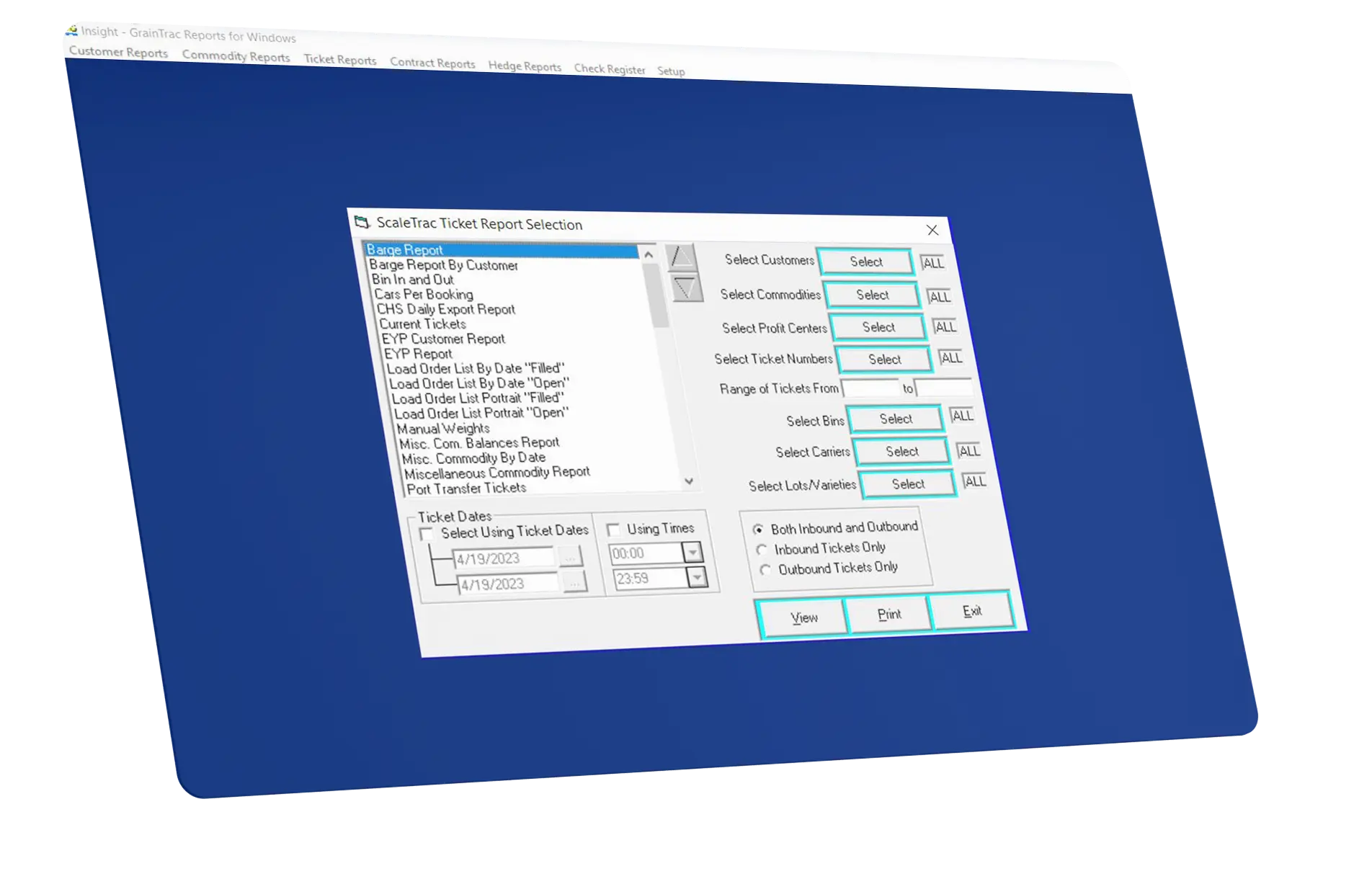
ScaleTrac supports grain scale ticketing workflows while helping facilities improve operational visibility across receiving and scale activity.
2. Grain Accounting Software Features
Accounting functionality is a core component of grain facility software, but modern grain accounting software should also support operational workflows tied directly to grain movement.
Grain accounting software should help facilities connect receiving, inventory, settlements, contracts, and reporting into a more centralized workflow.
Important grain accounting software features include:
- Settlement workflows
- Inventory reconciliation support
- Contract integration
- Operational reporting access
- Audit visibility
- Accounting reconciliation workflows
Automation can improve grain accounting reconciliation workflows by reducing duplicate entry and improving consistency between systems.
GrainTrac supports accounting and operational workflows tied to grain movement, settlements, and inventory activity.
3. Grain Inventory Management Software Features
Inventory visibility is one of the most important operational capabilities grain facilities should evaluate during a grain software comparison.
Inventory management affects:
- Storage visibility
- Accounting accuracy
- Contract fulfillment
- Operational planning
- Reporting workflows
- Grain movement tracking
Grain inventory management software helps facilities improve visibility into grain positions, storage activity, and inventory movement across operations.
Facilities comparing grain software features should evaluate:
- Real-time inventory updates
- Inventory reporting tools
- Storage management workflows
- Inventory reconciliation support
- Multi-location inventory visibility
- Grain movement tracking
4. Grain Reporting Software and Operational Visibility
Operational reporting is often overlooked during software evaluations, but reporting visibility directly affects operational decision-making.
Grain facilities need reporting access across:
- Scale activity
- Inventory movement
- Accounting workflows
- Contracts
- Truck flow
- Operational performance
Grain reporting software helps facilities centralize operational and accounting visibility into more accessible reporting workflows.
Buyers should evaluate:
- Real-time reporting access
- Historical reporting
- Cross-department visibility
- Operational dashboards
- Report customization
- Inventory reporting accuracy
Real-time scale data also improves reporting accuracy by reducing delays between receiving activity and operational updates.
5. Grain Software Integrations
Many grain facilities use multiple operational systems across accounting, automation, inventory, and scale management.
If systems cannot communicate effectively, facilities may rely on manual workarounds that increase reconciliation complexity and reduce operational visibility.
Grain software integrations help facilities connect operational workflows across departments.
Important integration considerations include:
- Scale integrations
- Inventory synchronization
- Accounting connectivity
- Reporting integration
- Automation compatibility
- Hardware support
Integrated workflows help facilities reduce duplicate entry while improving operational consistency.
6. Grain Facility Automation Features
Automation is becoming increasingly important in grain operations, especially during harvest when facilities need to process trucks efficiently while maintaining operational accuracy.
Grain facility automation helps streamline repetitive workflows tied to receiving, ticketing, reporting, and inventory management.
Facilities evaluating automation should consider:
- Automated ticket generation
- Real-time scale data collection
- Inventory synchronization
- Automated reporting workflows
- Contract verification workflows
- Receiving automation support
Automation workflows can improve operational consistency while supporting faster receiving and reconciliation processes.
Unattended Grain Scale Ticketing Features
Some grain facilities are also evaluating unattended receiving systems to improve truck flow and reduce congestion at the scale.
Unattended grain scale ticketing systems help automate portions of the receiving workflow while supporting more consistent data capture.
Facilities should evaluate whether unattended workflows support:
- RFID workflows
- Self-service kiosks
- Automated ticket generation
- Inventory synchronization
- Accounting integration
- Operational reporting visibility
RFID and self-service kiosk workflows may help facilities streamline grain receiving during higher-volume periods.
7. Cloud-Based Grain Software Accessibility
Many grain facilities are transitioning from older on-premise systems to cloud-based grain software environments.
Cloud-based grain software may improve:
- Remote system access
- Multi-location visibility
- Operational collaboration
- Reporting accessibility
- System scalability
Facilities comparing grain software should evaluate how accessible operational data is across accounting, management, and receiving teams.
8. Grain Contract Management Features
Contract management workflows are closely connected to grain receiving, settlements, inventory, and accounting operations.
Grain contract management software helps facilities improve visibility into grain contracts and fulfillment activity.
Important contract-related features include:
- Contract visibility at the scale
- Settlement integration
- Inventory coordination
- Reporting access
- Audit visibility
9. Software Scalability Across Grain Operations
Facilities should evaluate whether software can support long-term operational growth and changing workflow demands.
This is especially important for:
- Multi-location grain facilities
- High-volume harvest operations
- Feedmills
- Ethanol plants
- Growing grain elevator operations
Software scalability should support:
- Higher truck volumes
- Expanded reporting needs
- Inventory growth
- Additional receiving points
- Cross-location visibility
- Operational workflow consistency
Feedmill grain software and ethanol plant grain software environments may require different operational workflows than traditional grain elevators, making scalability and flexibility important evaluation factors.
Questions Buyers Should Ask During a Grain Software Comparison
Before selecting grain facility software, decision-makers should evaluate how well the system supports operational workflows across the facility.
Key questions include:
- How does the software connect receiving to accounting?
- Can inventory updates happen in real time?
- How accessible are operational reports?
- Does the software support automation workflows?
- How are integrations managed?
- Can the software scale across multiple facilities?
- How does the system support reconciliation workflows?
- What implementation considerations should be planned for?
Choosing grain accounting software should involve both operational leadership and accounting teams because the software impacts workflows across the entire grain facility.
How Vertical Software Supports Grain Operations
Vertical Software provides connected grain facility software solutions for grain elevators, feedmills, ethanol plants, and grain operations.
Its platforms support:
- Grain scale ticketing
- Grain accounting workflows
- Inventory management
- Operational reporting
- Automation
- Grain software integrations
- Contract management
- Operational visibility
GrainTrac, ScaleTrac, and Ceres help facilities connect operational workflows across receiving, inventory, reporting, accounting, and automation systems.
Facilities comparing grain software platforms can explore Vertical Software features or contact the Vertical Software team to learn more about improving grain facility workflows and operational visibility.